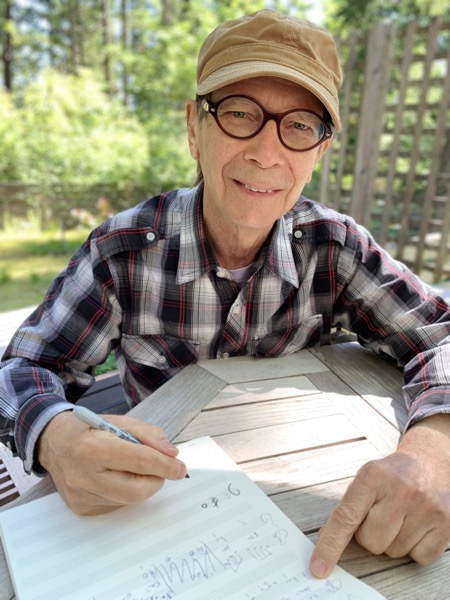
Director · Editor
Andrew Homzy
Professor Emeritus, Concordia University. Discoverer of Mingus' Epitaph (1984); Grammy nominee for liner notes on the Mingus Atlantic recordings.


An annotated full edition of everything the band recorded that year, restored as score and playable parts for scholars and performers.
King Oliver's Creole Jazz Band made 37 recordings in 1923. A century later, not one of them exists in a critical edition.
The band recorded for Gennett, Paramount, Columbia, and OKeh between April and December of that year, in Richmond, Indiana and in Chicago. These are the sessions where a 21-year-old Louis Armstrong played second cornet beside his mentor, and they document an ensemble music built on collective improvisation rather than on the string of solos that came after.
This project will publish all 37 sides for the first time: as annotated full scores, as playable performance parts, and as an editable digital archive. We are working with the Library of Congress and the University of Chicago Jazz Archives, and drawing on period sheet music from publishers including Melrose Music of Chicago to check and complete each transcription.
Audio stem separation isolates each musician's part from the dense, century-old recordings, so we can hear Lil Hardin's piano, Johnny Dodds' clarinet, or Baby Dodds' drums on their own. Transcribers who specialize in these instruments and this period then write down what they hear.
Since all of the music is in the public domain, we are able to publish it without the rental and pricing restrictions that keep comparable scholarly editions off most bandstands.
All 37 sides in complete seven-part scores in concert pitch, with reasoned reconstructions of the indistinct passages, expanded to nine parts with presumptive double bass and drum set. Two volumes, divided by session: Gennett & Paramount (16 sides) and Columbia & OKeh (21 sides). Editorial notes and historical context throughout.
A working edition for players: all parts in their appropriate transpositions, with performance-practice guidance and options for period or modern instrumentation.
After publication, we will release editable MusicXML files worldwide, to qualified transcribers who propose corrections. Any edits we accept get posted as public errata, with the reasoning attached.
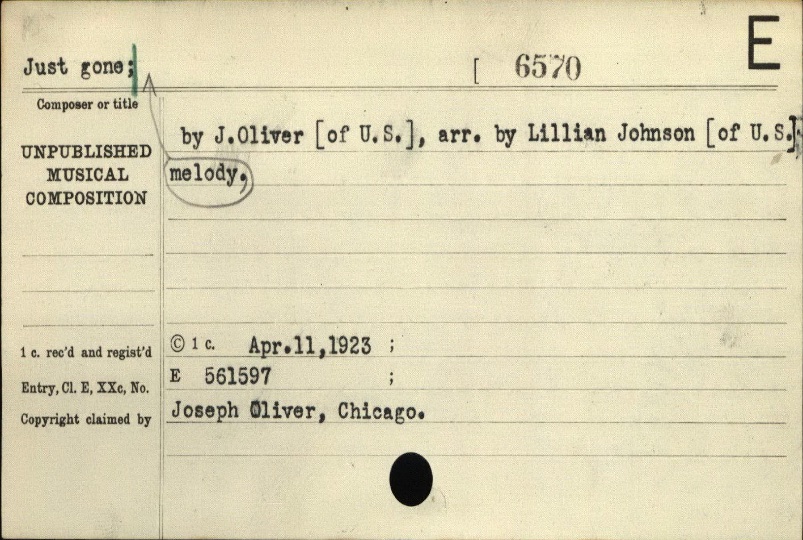
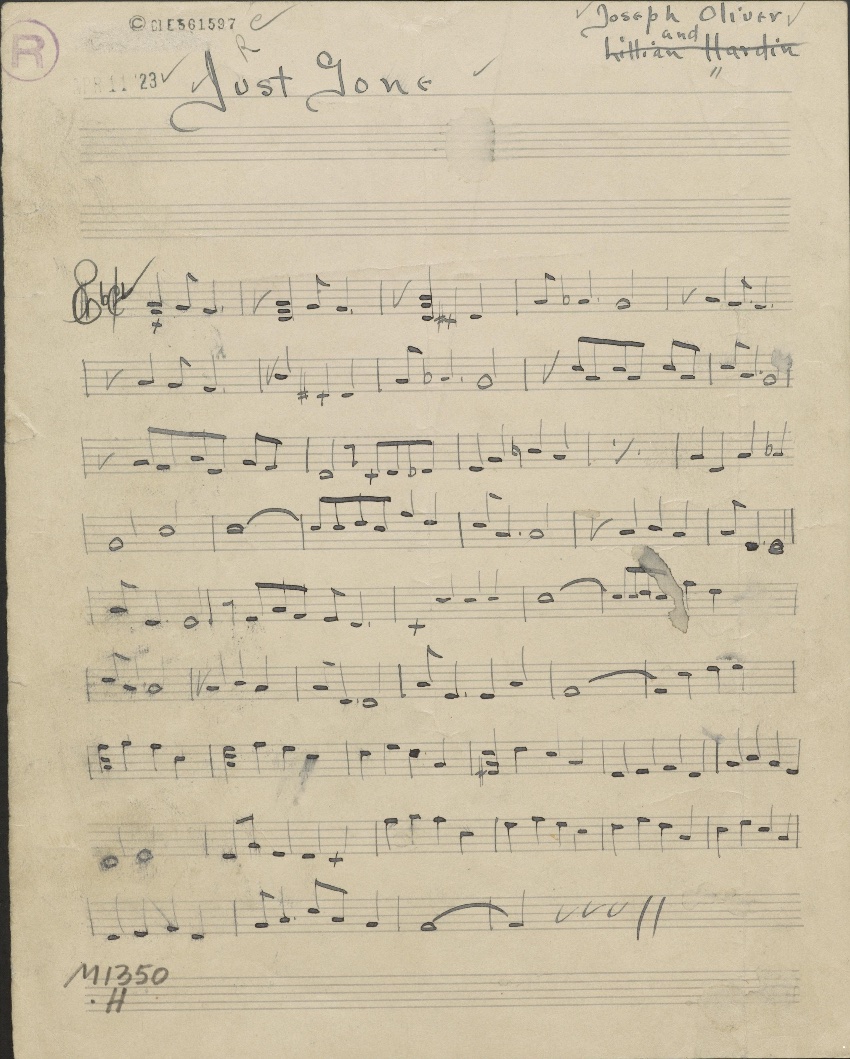
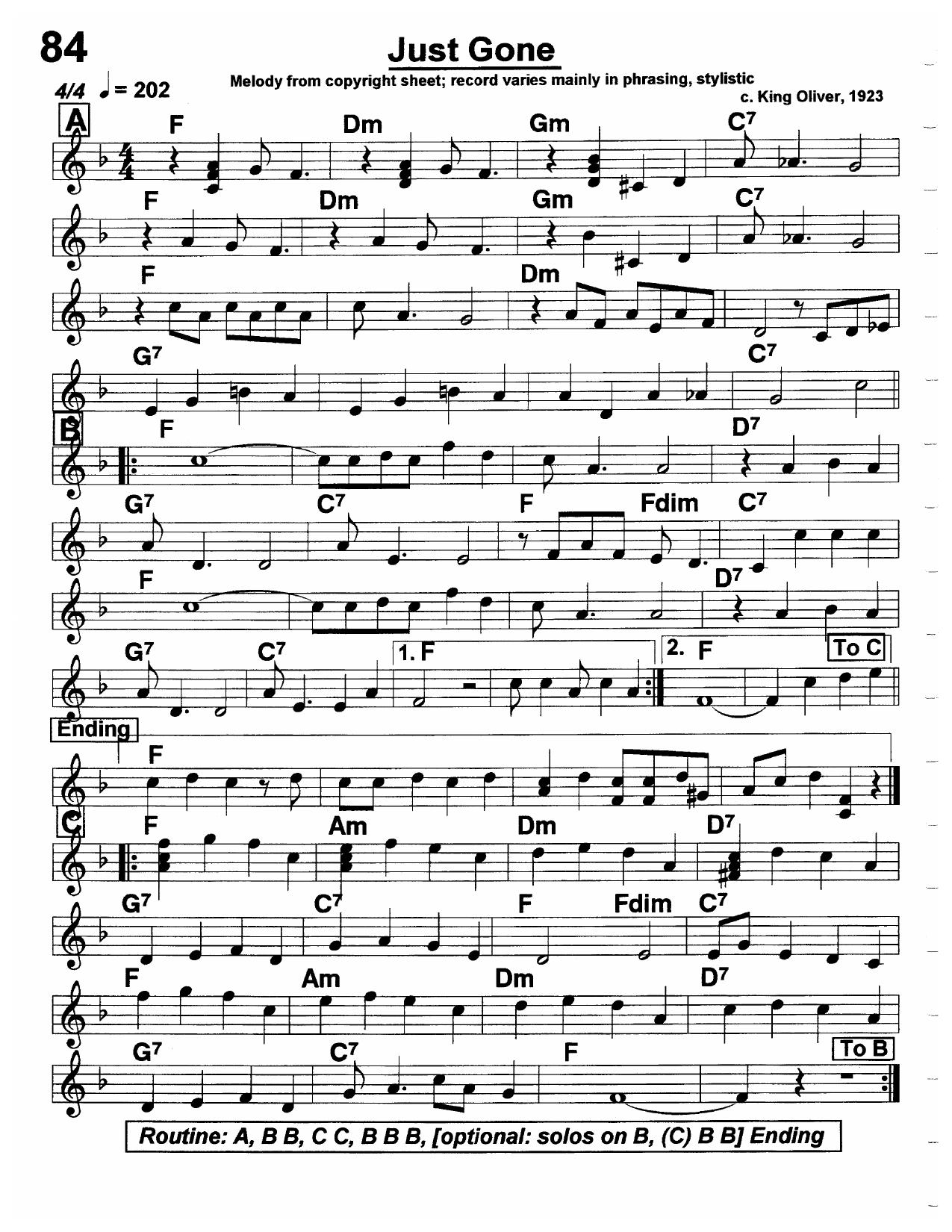
The first piece King Oliver's Creole Jazz Band ever recorded, cut at the Gennett Records studio in Richmond, Indiana, on April 5, 1923 (Gennett 11383-B, credited to Oliver and Lillian Johnson, née Hardin). Three earlier documents accompany it: the 1923 copyright catalog card, the required melody deposit, and a 1990s fakebook lead sheet. Below them, a draft sample of our full score.
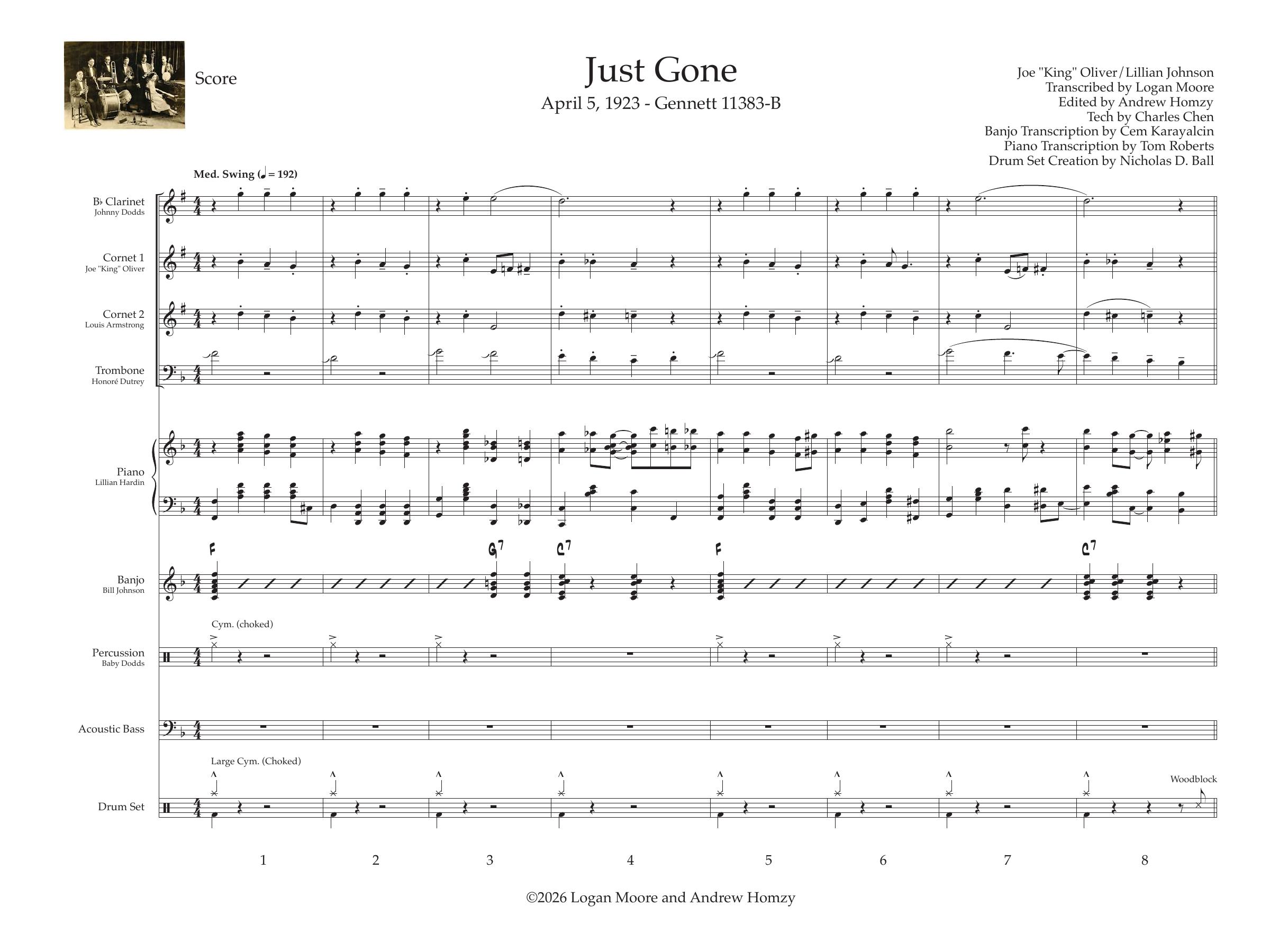
Source separation pulls the seven-piece band apart, part by part: Lil Hardin's piano (the line we transcribe), the two cornets of Oliver and Armstrong, Honoré Dutrey's trombone, Johnny Dodds' clarinet, Bill Johnson's banjo, and Baby Dodds' drums. Every stem is tuned to concert pitch (A = 440). Solo one to hear it alone, or set the faders back toward the balance as it sat on the 1923 Gennett disc. Each fader redraws its own waveform as you move it.
A small team of musicians, transcribers, and scholars is preparing the edition, working with the archives that hold the original source materials. Once it is published, any scholar or performer who finds an error can propose a fix.
Professor Emeritus, Concordia University. Discoverer of Mingus' Epitaph (1984); Grammy nominee for liner notes on the Mingus Atlantic recordings.
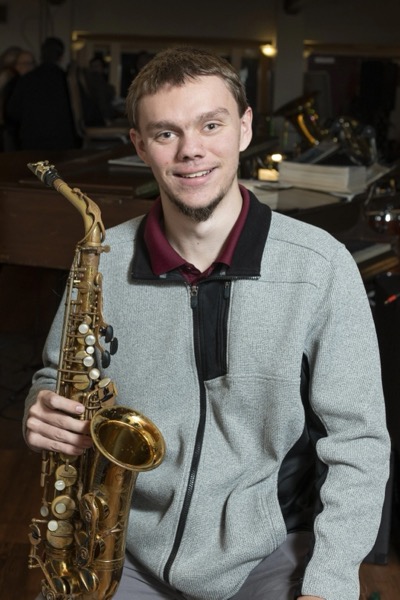
Composer, arranger, and saxophonist (B.M. Jazz Studies, UNT). Columbus Jazz Orchestra; principal transcriber for the edition.

Bay Area jazz pianist, composer, and educator. Transcription and editing, developer of the transcription technology behind this edition, and webmaster of the project.
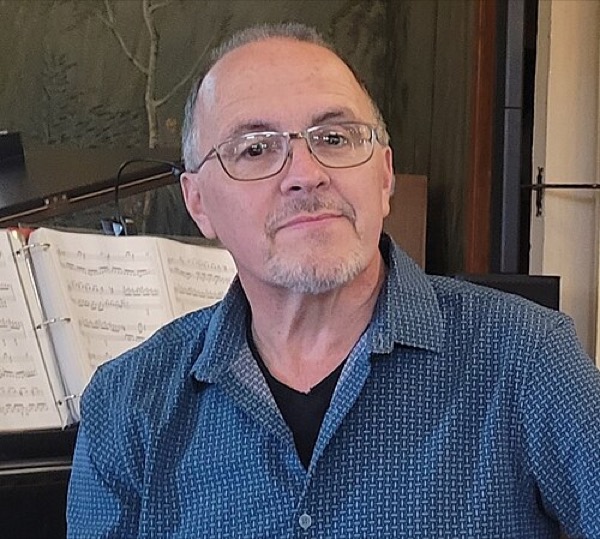
American pianist; specialist in stride and early jazz piano. Has toured with Leon Redbone and the Original Dixieland Jazz Band.
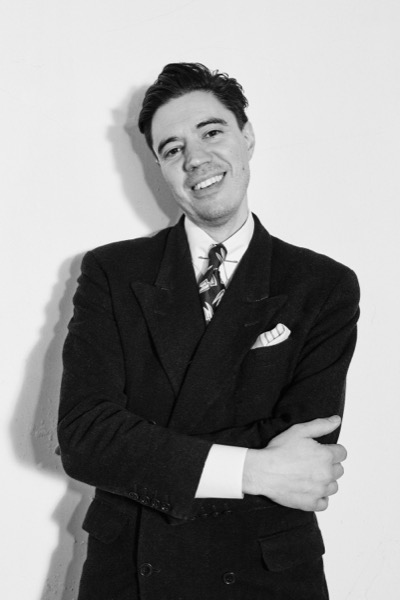
London-based drummer and historian. Author of Drums in the Twenties; specialist in the period drum kit.
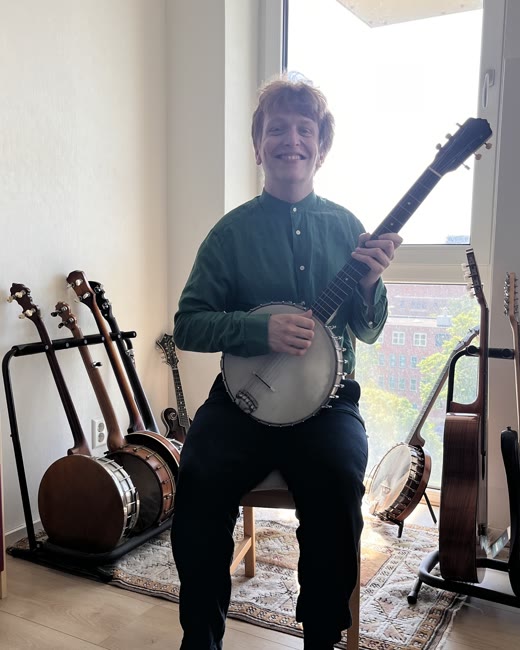
Dutch jazz banjoist/guitarist (Conservatorium van Amsterdam). Performs with The Fried Seven across Europe.
The project has been personally financed to date. To finish the remaining transcriptions and commentary and get the edition into print, we are looking for institutional, philanthropic, and individual partners.
Contributions go to the editorial work, to archive licensing where it applies, and to producing a printed edition alongside the open-source files.
For funding, partnership, scholarly contribution, or transcription review, write to andrew.homzy@gmail.com, or visit homzy.ca.